SolarEdge Inverters Shut Down and Restart
Restarting your SolarEdge inverter can often resolve Wi-Fi dropouts, communication faults, or minor system errors.
Before you start
- Perform the restart during daylight hours so the inverter receives solar input.
- Check that there are no visible faults, loose connections, or damaged isolators.
- If your inverter has a battery connection (for example, in hybrid setups), make sure the battery system is idle and not in backup mode.
- Never restart during a lightning storm or when system components appear damaged.
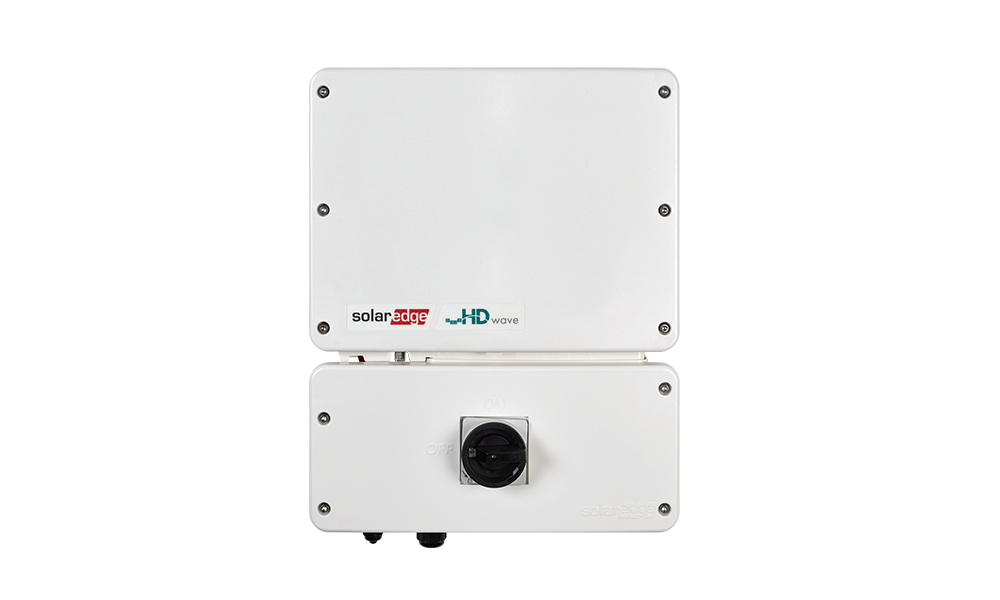
SolarEdge Inverter
1. Turn off the AC isolator
The AC isolator is located next to the inverter and clearly marked “AC Isolator.”
Turn the switch to the OFF position.
2. Turn off the DC isolator
The DC isolator is integrated into the inverter.
It is labelled “PV Array DC Isolator.”
Turn the switch to the OFF position.
Wait 60 seconds for the inverter to fully de-energise.
3. Wait 1–2 minutes
Allow all lights and display indicators to switch off completely.
This ensures internal capacitors discharge and the system resets fully.
4. Turn the DC and AC isolators on
Turn the DC isolator switch to the ON position first.
Then turn the AC isolator switch to the ON position.
The inverter will take about 60 seconds to power back up.
5. Allow the inverter to start up
The inverter will run internal checks and initialise communication.
Within a few minutes, the inverter display or LEDs should show normal operation.
Tips
- Always follow the correct sequence: SolarEdge systems must be turned OFF and ON in the right order. Doing it out of sequence can cause errors or prevent the inverter from restarting.
- Wait the full 60 seconds: After switching OFF the DC isolator, give the inverter enough time to fully de-energise before powering it back up. This avoids incomplete shutdowns.
- Avoid rapid power cycling: Turning the system OFF and ON too quickly can confuse the inverter or cause fault codes. Slow and steady is best.
- Check that all switches are fully engaged: Sometimes isolators don’t click fully into the ON or OFF position. A half-turned switch can stop the inverter from starting.