Solar for Farms and Rural Properties in Penrith, the Hawkesbury & the Blue Mountains
Pumps, shed fans, cold rooms and workshops all run in daylight, which is exactly when solar produces. Since 1 October 2026 the federal rebate also covers systems up to 1MW, so a farm shed roof is worth a proper look.
Why Farm Solar Suits This Region
Around 80% of the Penrith local government area is rural or rural-residential, according to Penrith City Council. Its rural lands include egg and poultry farms around Londonderry, Llandilo, Luddenham and Kemps Creek, turf on the Nepean flats at Agnes Banks and North Castlereagh, and horse studs, nurseries and rural tourism around Mulgoa and Wallacia.
Next door, the Hawkesbury ranks first in Greater Sydney for value of agricultural production, with turf, poultry and horticulture all strong, in NSW DPI’s Greater Sydney snapshot. And up the Mountains there are large rural-residential blocks, valley properties and some places where the grid doesn’t reach at all.
What these properties share is daytime load: irrigation pumps, ventilation fans, cold storage, workshops and washdown. Solar uses that power as it’s made, which is the best-value way to use it.
Farm solar isn’t just a bigger home system. Motor start-ups, long cable runs, three-phase supply, old shed roofs and bushfire or flood risk all change the design. That’s what the rest of this page covers.
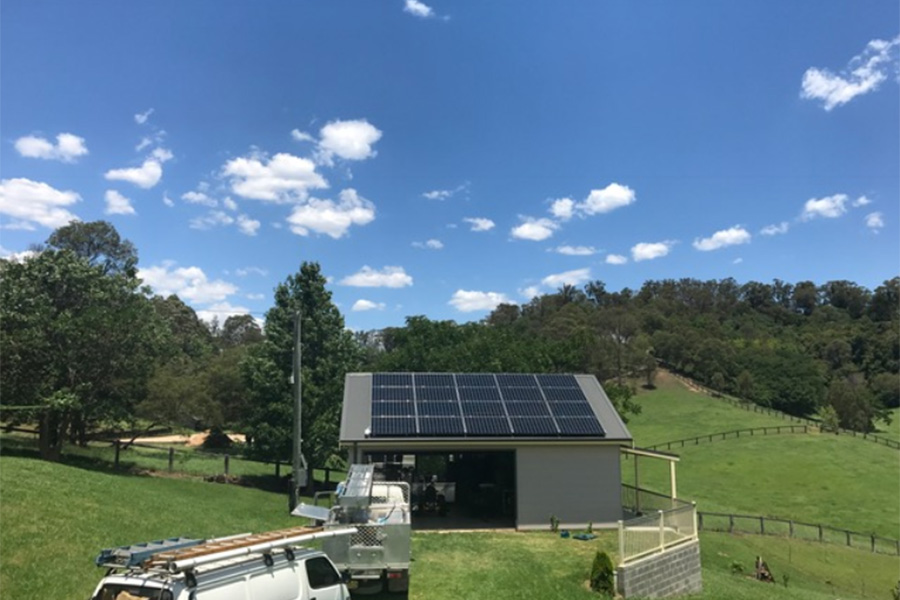
Shed Roof or Ground-Mount?
Shed roofs are usually the cheapest place for panels: large, simple and often well-oriented. Three things decide whether a roof is suitable:
- Roof material. Colorbond and galvanised sheeting are straightforward. Older sheds can have asbestos-cement sheeting, which can’t be drilled or walked on safely. The usual answers are a ground-mount or a re-roof first.
- Structure and age. Purlins, rust and fixings need checking before anything goes on. Older galvanised roofs can hide surprises, so we inspect before we quote.
- Shade. Trees and neighbouring sheds matter more than you’d expect, especially in the Mountains. Power optimisers and micro-inverters help where shade can’t be avoided.
Ground-mounts suit sites where the roof isn’t right or you want more capacity than the sheds can hold. They need cable trenching, stock-proof fencing and a position clear of flood levels. Depending on zoning, size and overlays such as bushfire or flood, they can also need council approval, so we check early.
What's Different About a Farm System
Big motors start hard
Bore pumps, compressors and cool-room units draw a large surge when they start. A grid-connected system handles it by drawing from the grid. For battery backup, the battery inverter has to cope with the surge, or the motor needs a soft starter or variable-speed drive. We check this at the design stage.
Long cable runs
The distance from a shed to the main switchboard can be long, and long runs mean voltage rise. Endeavour flags it as a common compliance issue, and the fix can be thicker cable or moving the inverter. See our Endeavour approval guide.
Three-phase supply
Many farms already have three-phase for machinery. It raises the fast-track approval limit from 10kW to 30kW and suits larger systems and batteries. If you’re on single phase, ask whether an upgrade is possible. Our guide to single vs three phase explains the difference.
Dust, birds and wildlife
Poultry, turf and stock areas create dust, and sheds attract birds that nest under panels. Plan for cleaning access and bird proofing, and use monitoring so a fault or a drop in output is spotted early. Our service team can help.
What the Rebate Is Worth on a Farm
A farm is a business, so it earns small-scale technology certificates (STCs) the same way a shop or factory does. The formula is system size (kW) x zone rating x deeming years. Every postcode we serve, including rural Penrith, the Hawkesbury and the Blue Mountains, is Zone 3 (rating 1.382), and a system installed in 2026 gets five deeming years, about 6.9 certificates per kW.
From January 2027, systems up to 100kW earn one year less each January. Systems above 100kW and up to 1MW stay at five years. See our commercial solar rebate guide for the detail.
| System size | Example farm use | STCs (Zone 3) | Indicative value |
|---|---|---|---|
| 30kW | Machinery shed or workshop | 207 | $7,200 to $8,300 |
| 50kW | Packing shed or stables with cool rooms | 345 | $12,100 to $13,800 |
| 100kW | Large shed or several buildings | 691 | $24,200 to $27,600 |
| 250kW | Poultry sheds or multi-building operation | 1,727 | $60,400 to $69,100 |
Estimates use a certificate price of $35 to $40, before GST. STCs trade on the market and the Clean Energy Regulator sets the final number. The value is usually taken off your invoice by the installer, not paid as cash.
Adding a battery? The federal battery rebate covers batteries from 5 to 100kWh and counts the first 50kWh of usable capacity, with the rate tapering above 14kWh. See our federal battery rebate guide and rebate calculator. NSW’s new business battery incentives (BESS4 and BESS5) started on 1 September 2026, and whether a farm site qualifies depends on how it’s classified, so we check it at quote stage. Ask your accountant about tax treatment.
Keeping Pumps and Cold Rooms Running in an Outage
On a farm, an outage isn’t an inconvenience. Stock water, egg and produce cold storage, milking or ventilation can all stop. Storms and bushfire season make it a real risk across the region.
A battery can back up the essentials, but it needs deciding up front:
- Pick the circuits. Most farms back up water pumps, cold rooms, lighting and the house. Backing up the whole property is rarely worth the cost.
- Check the surge. The battery inverter must handle the start-up current of your biggest motor.
- Consider a generator. For long outages, a generator with an automatic changeover switch can work alongside a battery.
Read our blackout protection guide, size the battery with our battery size calculator, and see our battery storage options. In the Mountains, where you mount the battery matters in winter.
Battery placement is also governed by AS/NZS 5139, and bushfire attack level (BAL) rules can affect where a battery and cabling can go on rural blocks.
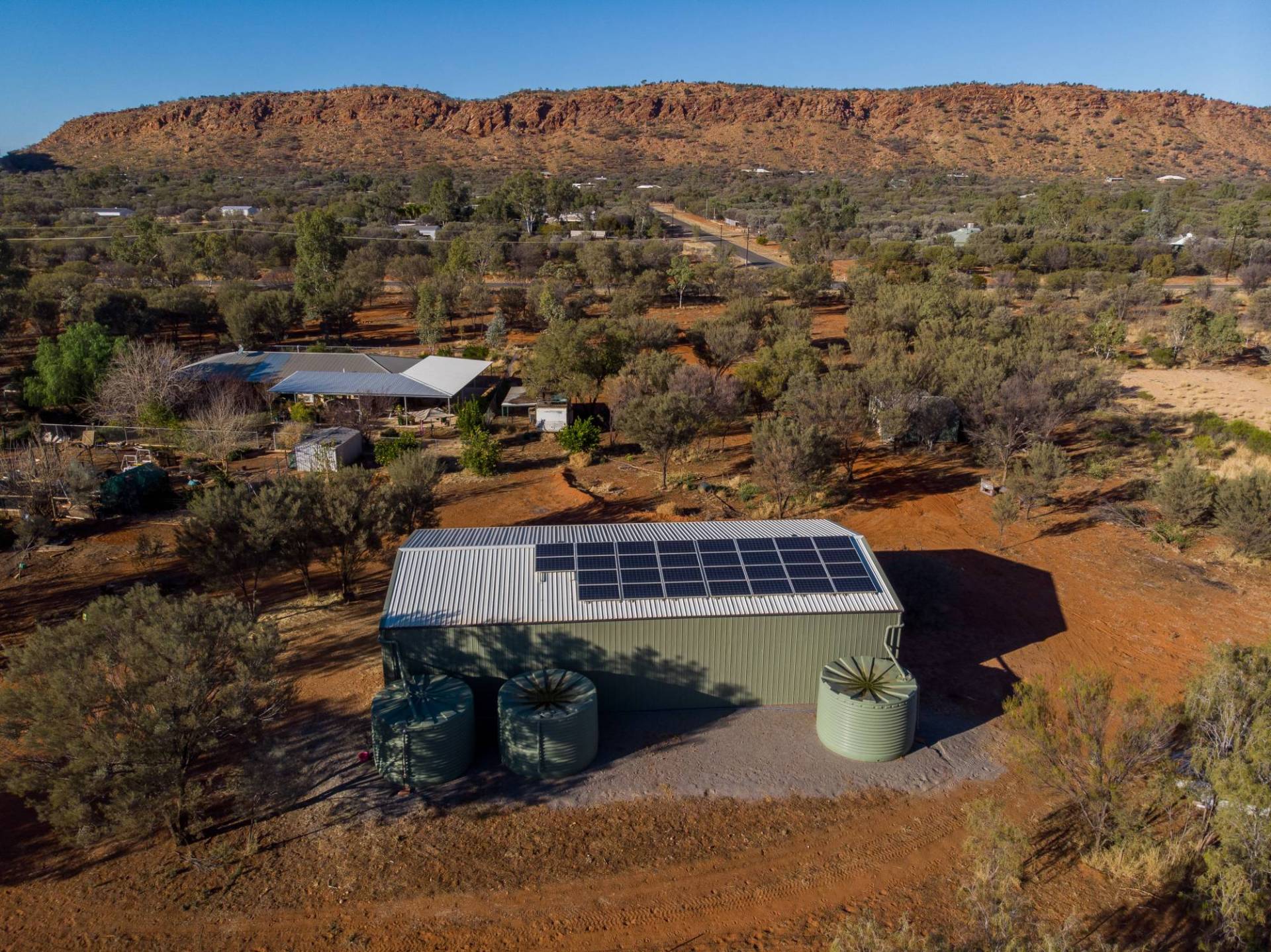

Remote Blue Mountains Properties: Grid-Connected, Hybrid or Off-Grid
Some valley and bush properties up the Mountains are a long way from the nearest pole. For those, the question is whether to connect, or to go fully off-grid.
Grid-connected is usually the cheaper and simpler option if power is already at the boundary. The grid is your backup, and the rebate and approval rules on this page apply.
Off-grid is designed differently. A grid-connected battery only needs to cover most nights. An off-grid system has to get through your worst week, so it needs more panels, more storage and often a generator for backup. We’ve installed both, including a ground-mount system at Mount Victoria.
Read more on our off-grid solar page, and see local detail for Mount Victoria, Little Hartley and Lithgow.
Approval on a Rural Property
Most of rural Penrith, the Hawkesbury and the Blue Mountains is on Endeavour Energy’s network. Parts further west may be on Essential Energy, which has different rules, so confirm yours first.
Rural sites hit the approval questions that suburban homes rarely do:
- Size decides the path. Under 10kW single phase or under 30kW three phase is a fast-track connection. Above that, Endeavour does a detailed assessment, which many farm systems fall into.
- Long feeders limit export. Rural lines are longer and can have less spare capacity, so export limits and voltage rise need checking before you commit.
- Internet at the shed. New export arrangements rely on a live connection, and sheds often have weak coverage. Plan a wired or boosted link.
- Dates matter. If you’ve been approved but haven’t installed, commissioning has to happen by 31 December 2026 or you’ll need to reapply.
Our Endeavour Energy approval guide covers each of these. For business-scale systems, our commercial solar page and business solar benefits add more context.
Signs your farm quote was worked out
- It starts from a year of bills or interval data and your tariff
- It’s sized to your daytime load, not just the roof
- It addresses motor start-up for pumps and compressors
- It names your supply (single or three phase) and the Endeavour approval path
- It checks the cable run and voltage rise
- It includes a roof inspection, including asbestos and structure
- It shows the STC count and the price assumed
- It names which circuits a battery would back up
Signs it was guessed
- A system sized to roof area and nothing else
- A headline “20% off” with no certificate maths
- No mention of pump or compressor surge for backup
- “Whole farm backup” promised without naming the circuits
- No word on Endeavour approval or how long it takes
- No roof inspection before quoting
- The $40 maximum assumed for STCs when the market sits a little lower
- Pressure about a rebate ending, when mid-scale systems have a fixed rate to 2030
From Farm Bills to Switch-On
Send your bills
Site visit
Design and quote
Approve and install
Farm Solar: Your Questions
Yes. A farm is a business, so a solar system earns small-scale technology certificates (STCs) like any other business. Since 1 October 2026 the rebate covers eligible systems from 100kW up to 1MW as well as smaller ones. Certificates are calculated as system kW x zone rating x deeming years. Rural Penrith, the Hawkesbury and the Blue Mountains are Zone 3 (rating 1.382), so a 2026 install earns about 6.9 certificates per kW. The installer usually takes the certificates and deducts their value from your invoice.
It depends on what you use in the daytime, not the size of the roof. We start from a year of bills or interval data and a list of what runs when, such as pumps, fans, cold rooms and workshops. You can get a rough idea with our solar system size calculator, and we confirm it at a site visit.
Often yes, but the roof has to be checked first. Colorbond and galvanised sheeting are usually fine, subject to structure and rust. Asbestos-cement sheeting can’t be drilled or walked on safely, so the usual options are a ground-mount or replacing the roof first. We inspect before quoting so there are no surprises on install day.
Neither is better in every case. Roofs are usually cheaper because the structure already exists. Ground-mounts suit sites where roofs are shaded, unsuitable or too small. They need cable trenching, fencing from stock and a position above flood level, and can need council approval depending on zoning, size and overlays such as bushfire or flood.
A grid-connected system powers pumps directly while the sun is up. Large motors draw a surge when they start, which the grid supplies. If you want a battery to run a pump in an outage, the battery inverter has to handle that surge, or the pump needs a soft starter or variable-speed drive. We check this during design.
Not always, but many farms benefit from it. Endeavour’s fast-track approval limit is under 10kW on single phase and under 30kW on three phase, so three-phase allows larger systems through the quick path. If you’re on single phase, ask whether an upgrade is possible. See our single vs three phase guide and Endeavour approval guide.
It can keep selected circuits running, such as water pumps, cold rooms, lighting and the house. Backing up an entire farm is rarely cost-effective. The battery has to be sized for those circuits and must cope with motor start-up currents. For long outages, a generator with an automatic changeover switch can work alongside it. See our blackout protection guide.
Both affect design. Bushfire attack level (BAL) rules can influence where batteries, inverters and cabling go, and batteries must meet the placement rules in AS/NZS 5139. Along the Hawkesbury-Nepean flats, equipment should sit above flood level where flooding is a risk. We raise these at the quote stage rather than on install day.
Yes. Most of rural Penrith, the Hawkesbury and the Blue Mountains is on Endeavour Energy’s network. Systems under 10kW single phase or under 30kW three phase go through a fast-track online process. Larger systems get a detailed assessment, and the Clean Energy Regulator expects evidence of network approval when you claim certificates. See our Endeavour approval guide.